
Second Pan-European Green Nudges Conference 2026
Advancing Behavioural Approaches for Sustainable Agriculture and Forestry

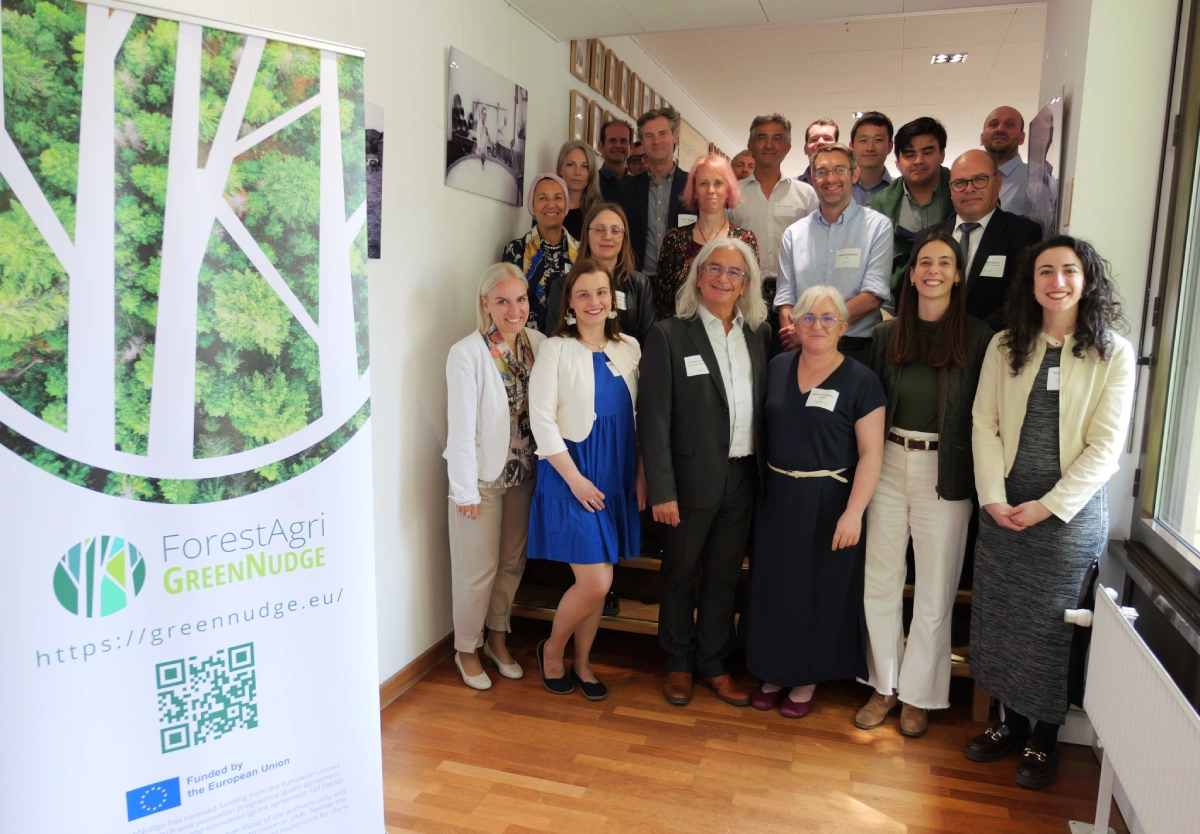
On 21 May 2026, the ForestAgriGreenNudge project, together with the PRUDENT project, welcomed around 80 participants to the Second Pan-European Green Nudges Conference at the COPA-COGECA offices in Brussels. The event brought together researchers, policymakers, advisers, farmers, foresters and representatives of European institutions to exchange ideas on how behavioural approaches can support the transition towards more sustainable agricultural and forestry systems.
Building on the success of the first Pan-European Green Nudges Conference held in 2025, this year’s edition focused on translating research into practice. It provided an opportunity to present the first results emerging from the ForestAgriGreenNudge case studies, explore their policy implications and strengthen dialogue between science, practice and policymaking. Organised in close collaboration with the PRUDENT project, the conference further reinforced cooperation between the two Horizon Europe initiatives, creating a shared platform for exchanging knowledge and experiences on the use of behavioural insights to encourage sustainable land management.
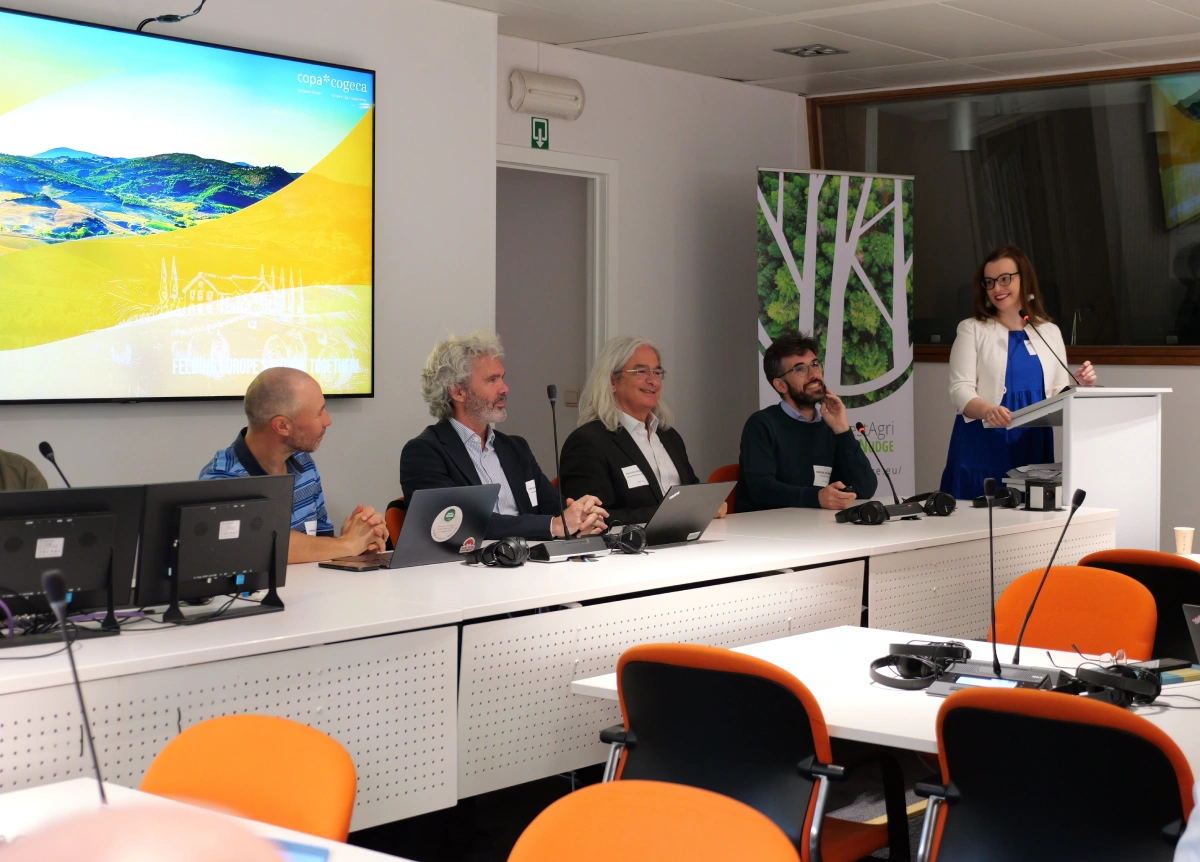
From research to practical solutions
The conference showcased the latest progress of the ForestAgriGreenNudge project, including early findings from case studies carried out across Europe and the launch of the ForestAgriGreenNudge Library, a new resource designed to support knowledge sharing and future research activities.
Opening presentations explored the growing role of behavioural insights in European policymaking, particularly in the context of future developments of the Common Agricultural Policy (CAP). Speakers highlighted how green nudges can complement existing regulatory and financial instruments by encouraging voluntary behavioural change while respecting individual choice.
Presentations throughout the morning combined scientific evidence with practical experiences from agriculture and forestry, demonstrating how behavioural interventions can help overcome barriers to adopting more sustainable practices. The sessions also encouraged dialogue between researchers, advisers, practitioners and policymakers on how behavioural science can contribute to more effective environmental policies.
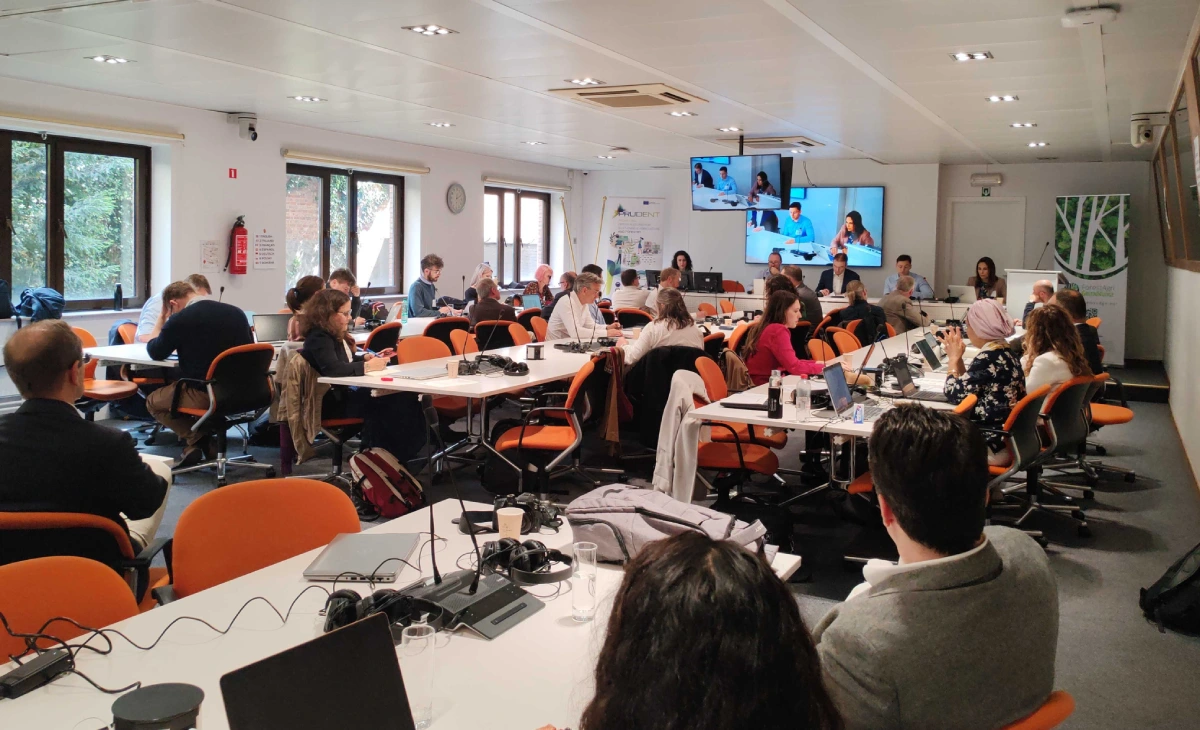
Policy Hackathon: turning ideas into recommendations
The centrepiece of the conference was the interactive Policy Hackathon, which brought together experts from across Europe to develop recommendations for integrating behavioural approaches into future agricultural and forestry policies. Rather than following a traditional conference format, participants engaged in moderated thematic discussions, encouraging the exchange of perspectives between policymakers, researchers, advisers and practitioners and creating space for collaborative problem-solving.
Four thematic discussion groups explored key dimensions of behaviourally informed policymaking.
The first group examined how green nudges can be integrated into existing policy frameworks, particularly the Common Agricultural Policy. Discussions highlighted the importance of embedding behavioural insights within existing governance and advisory structures, simplifying administrative processes and creating opportunities to test innovative approaches before wider implementation.
The second group focused on behavioural segmentation and how different groups of farmers and foresters respond to behavioural interventions. Experts emphasised that successful measures should reflect the diversity of farming and forestry systems, while trust, transparency and stakeholder involvement were identified as essential for increasing acceptance and encouraging long-term behavioural change.
The third group explored the links between behavioural insights, Agricultural Knowledge and Innovation Systems (AKIS) and digital technologies. Discussions highlighted the crucial role of advisory services, demonstration activities and peer learning in supporting behavioural change, while recognising that digital tools are most effective when combined with trusted advisory relationships and practical support.
The fourth group addressed governance, ethics and co-creation in the design of behavioural interventions. Discussions underlined that transparency, stakeholder participation and clear communication strengthen both the legitimacy and effectiveness of behaviourally informed policies. Participants also recognised the value of developing practical guidance to support the responsible application of behavioural insights across different policy contexts.
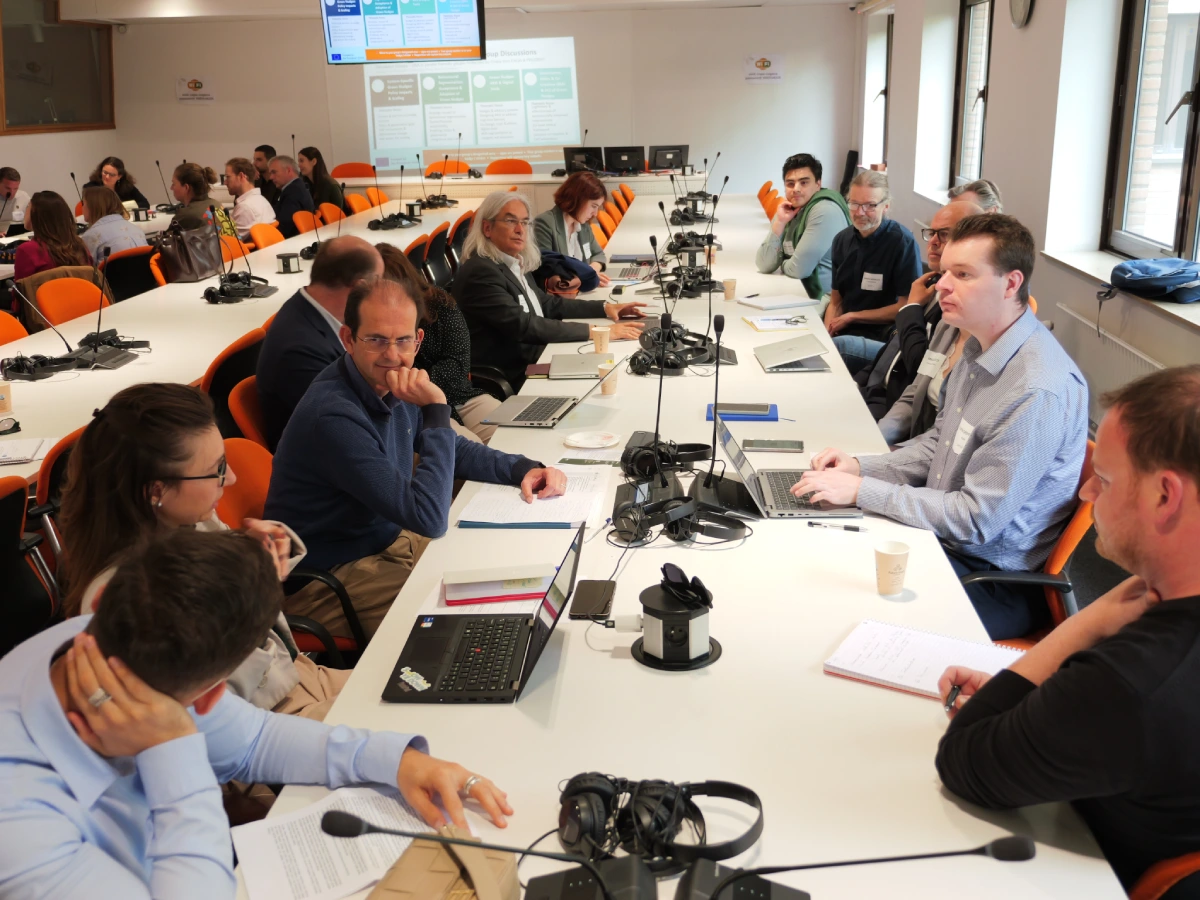
Common messages for future policy
Although each discussion group explored a different aspect of behavioural policymaking, several shared conclusions emerged. Participants agreed that behavioural approaches should complement existing policy instruments rather than replace them, while trust, co-creation and stakeholder engagement were consistently recognised as essential ingredients for successful implementation.
The discussions also highlighted the importance of tailoring interventions to local contexts, strengthening advisory services and expanding opportunities for demonstration and peer learning. Continuous collaboration between researchers, policymakers, advisers, farmers and foresters was identified as crucial for refining behavioural interventions and ensuring that future policies remain evidence-based, practical and responsive to the realities of European agriculture and forestry.
Conference Recordings
Looking ahead
With representatives from around 50 organisations across 16 countries participating both in person and online, the conference reflected the growing European interest in applying behavioural insights to support sustainability in agriculture and forestry.
The Second Pan-European Green Nudges Conference demonstrated how collaboration between research projects, policymakers and practitioners can accelerate the development of innovative solutions for the green transition. By combining scientific evidence, practical experience and interactive policy discussions, the event provided valuable input for the continued development of behaviourally informed policies and strengthened the European network working to support more sustainable and resilient agricultural and forestry systems.
INTRODUCTION
GREEN NUDGES IN ACTION
OPEN POLICY DISCUSSION
PROGRESS SESSION & CLOSING
The conference is organized in partnership with
This project has received funding from the European Union's Horizon Europe research and innovation programme under Grant Agreement No. 101134051