
Green Nudges in agroforestory: “Ecological transition is not a constraint but a source of well-being, health and meaning.”
Racines de France is a mission-driven company, and partner of the ForestAgriGreenNudge project, dedicated to restoring the resilience of territories through trees, forests, and regenerative land-use practices. To better understand how Racines de France puts these principles into practice—and how its flagship agroforestry initiative embodies the spirit of “green nudges”—we spoke with Yann Fortunato.
Yann, what has been your career path that led to founding Racines de France?
After 25 years of experience in forestry across France and internationally, I became increasingly aware that territories everywhere are confronted with four interconnected issues: rising atmospheric carbon, dramatic biodiversity loss, a disrupted water cycle, and the degradation of soils—whether agricultural, forest, or otherwise.
Across all these problems, I kept returning to the same realisation: trees and forests provide essential solutions. Trees capture carbon – around 35% of global carbon sequestration comes from forests. They protect and regenerate biodiversity, sustain the water cycle, and maintain healthy soils through root systems and organic matter, as well as preventing erosion.
With this deep conviction, I created Racines de France to demonstrate, through real projects, how trees can rebuild the resilience of territories facing climate change and ecological decline.
We work on two types of initiatives:
- Forest restoration, such as our work in Chaudes-Aigues in the Cantal region, where 150 hectares impacted by climate change are being rebuilt.
- Agroforestry demonstration projects, where we show how trees can restore soil health, biodiversity, and hydrological balance while producing nutritious food.
Our mission is not only ecological but also social and societal. We aim to inspire young people, decision-makers, and farmers, reconnect citizens with the natural world through direct, sensory experience, demonstrate that environmental regeneration supports human health, economic resilience, and territorial cohesion, and offer positive, hopeful models that counter climate anxiety and polarisation.
You have a flagship initiative in agroforestry. Can you tell us about this as an example of the use of green nudges?
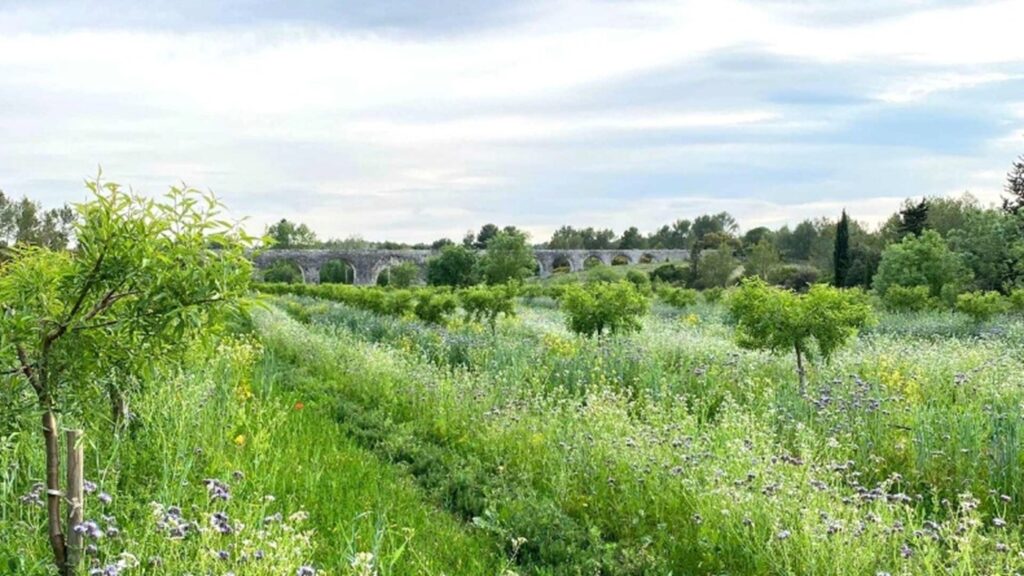
Eight years ago, in Castries near Montpellier, I began restoring a former vineyard that had been abandoned: the soil was exhausted, filled with plastics, nearly devoid of biodiversity, and entirely dependent on chemical inputs. The challenge was to show that even in a Mediterranean landscape dominated by resinous trees and fire risk, trees could rebuild resilience.
We developed a multi-layered agroforestry system on 5 hectares divided by a small stream:
- Choosing climate-resilient trees
We planted almond trees—species adapted to the region and to a warming climate—in extensive, low-intensity rows to avoid over-extraction of groundwater. This spacing frees up land for biodiversity to flourish. - Incorporating aromatic and medicinal plants
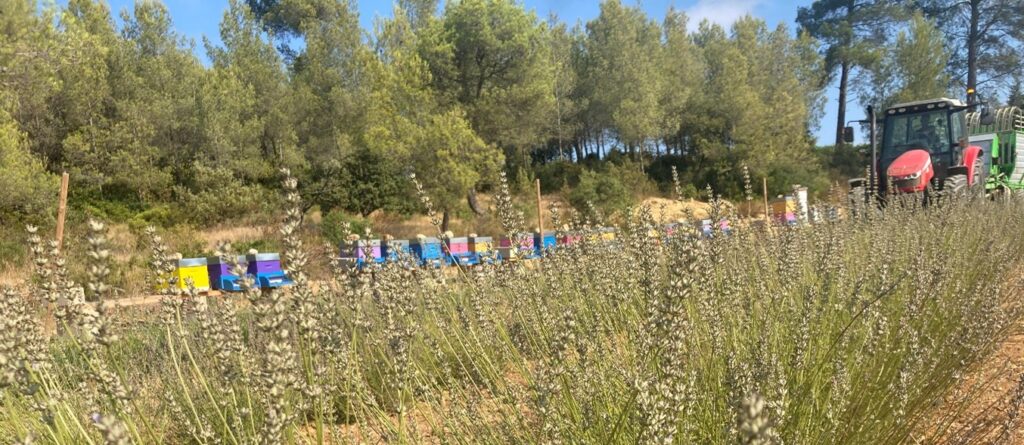
Between the tree rows, we planted rosemary and lavandin, drawing on Montpellier’s 800-year tradition in medicine and pharmacology. These plants enrich biodiversity and create value for local health-related industries. - Restoring soil life with selected groundcover
The remaining space was seeded with nectar-rich and soil-building species—clover, mustard, barley, oats, phacelia. This cover crops feed pollinators (including our 25 beehives), fragment the soil, and later dry out naturally. When mowed and left in place, they create a protective mulch that retains precious moisture during summer heatwaves. - Adding productive understorey species
As the almond trees grew, we introduced a “nutritional understorey”: currants, gooseberries, nashis, persimmons, sea buckthorn, vines, pistachios, pomegranates, citrus fruits, and more. This increases food diversity and ecosystem resilience. - Planting a higher canopy for shade and climate buffering
To prepare for future climate stresses, we added taller species—linden, mulberry, pecan trees, walnut trees, fig trees—to create islands of coolness and further enrich the landscape.
Together, these four vegetation layers form a complex, living ecosystem, far removed from monoculture. Complexity itself is a green nudge: it shows that nature thrives through diversity, not simplification.
Where are the nudges in this initiative?
Our nudges are based on a positive and inspiring message. They are everywhere in the beauty of the site, and the sensory experience that it provides, that reconnect people with the environment through their five senses. As well as demonstrating, in the social and economic dimensions, that regenerative agriculture protects the most vulnerable, reduces health risks, and supports long-term economic stability.
In that way, it offers inspiration to young people, farmers, medical professionals, and policy makers, who visit the site and see a positive model of the future.
We also work with local institutions—business networks (MEDEF, CPME, the Chamber of Commerce), agricultural authorities, the regional education system, and the pharmaco-medical sector—to welcome groups, create training sessions, and co-build environmental awareness anchored in real-world experience.
Ultimately, our agroforestry project acts as a living demonstrator: a place where people can experiment, reflect, and understand that ecological transition is not a constraint but a source of well-being, health, meaning, and collective action.
What motivated you to join the ForestAgriGreenNudge project?
Green nudges are about gently guiding people toward healthier, more sustainable choices, so this project aligns perfectly with our missions. We believe through our work that when people experience a resilient ecosystem—hear it, smell it, taste it, walk through it—they understand its value more deeply than through warnings or abstract messages.
We want to help the project explore how agroforestory projects, with trees as their foundation, can trigger social, economic, and cultural shifts simply by demonstrating what a more balanced and beautiful future could look like.